By David Yoder
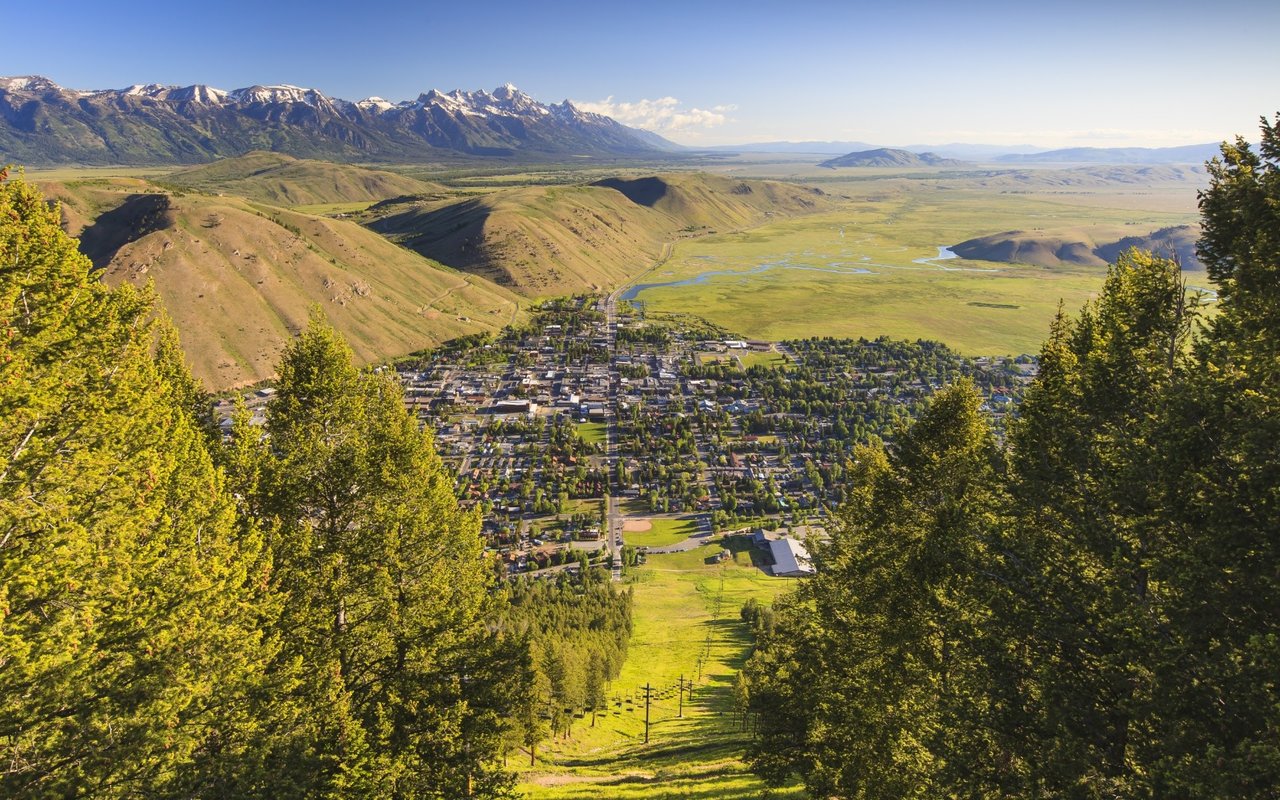
In Jackson Hole, the landscape sets the framework for everything else. Land ownership, development patterns, and even daily routines are shaped by geography and long-standing conservation policies. When we work with buyers here, part of the process includes exploring how the valley functions, its history, and even a few interesting tidbits about this one-of-a-kind destination.
Key Takeaways
- Jackson Hole is a valley, not a town, with Jackson serving as its primary hub.
- Only about 3% of land in Teton County is privately owned, shaping long-term supply.
- The region combines protected land, active wildlife migration, and limited development.
- The area's history spans from early Indigenous presence to modern architectural and lifestyle appeal.
- Many of the valley's defining features are tied to preservation rather than expansion.
The Geography of Jackson Hole
Jackson Hole is often misunderstood at a basic level, and one of the most fascinating aspects is the interplay between the valley and the surrounding mountain ranges. The terminology and land structure alone set it apart from most markets.
- The term "hole" is a relic from the language of the 1800s, when the word was often used to reference a high mountain valley, not a depression or gap.
- Jackson Hole is a 50-mile-long valley, while Jackson is the town situated at the valley's southern end.
- Roughly 97% of land in Teton County (approximately 3.7 million acres) is federally or state-managed, leaving a very limited amount for private ownership.
- The valley runs along the base of the Teton Range, which makes it a relative youngster in geological terms, forming around 10 million years ago.
An Active and Open Wildlife Refuge
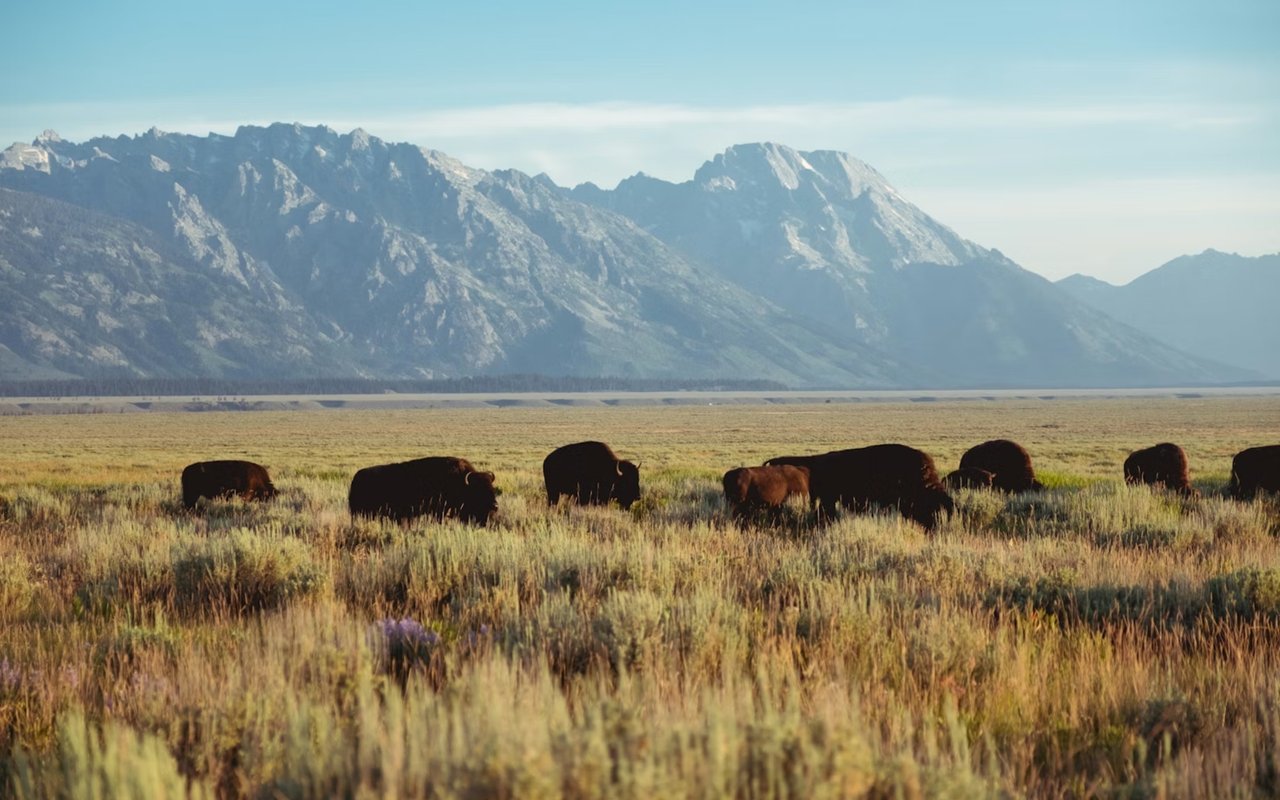
Jackson Hole is by no means a passive preserved landscape. It's an active, wild landscape home to more than 400 bird species and over 100 mammal species.
- The region is a singular destination for protected parkland, including the 300,000-acre Grand Teton National Park, established in 1929, which is part of the broader 22-million-acre Greater Yellowstone Ecosystem.
- The National Elk Refuge supports nearly 9,000 elk during winter migration.
- The refuge also contains one of the largest federally managed bison herds in the country.
- The valley serves as part of a broader migration corridor across the Greater Yellowstone Ecosystem.
- The 3.4 million-acre Bridger-Teton National Forest supports over 350 bird species.
A Natural Playground for Outdoor Lovers
The natural surroundings and the limited development in the valley have shaped recreational pursuits here for more than a century.
- Jackson Hole Mountain Resort has the largest continuous vertical drop of any ski resort in the United States at 4,139 feet.
- The Snake River is widely associated with the early development of whitewater rafting.
- Bill Briggs completed the first ski descent of the Grand Teton in 1971.
- The terrain across the valley supports year-round use, from skiing to rafting to backcountry travel.
- Grand Teton National Park and Bridger-Teton National Forest offer visitors a combined 40 campgrounds and over 2,500 miles of trails between them.
A Layered History, Past and Present
Jackson Hole boasts a cultural identity that extends beyond recreation, carrying its influence well beyond the valley floor.
- The town of Jackson elected the first all-female town council in the United States in 1920.
- The long-running town square shootout has been staged since the 1950s as a seasonal tradition, and the annual elk antler auction on the town square is the only public auction of its kind.
- The valley is a major host site for creative work across a broad range of mediums, including the New York Philharmonic's historic two-week residency in 1989, a benefit for the Grand Teton Music Festival.
- John Wayne filmed one of his earliest roles in the valley in 1932, and in 1977, the U.S. Voyager II spacecraft launched with a photograph of Jackson Hole taken by Ansel Adams onboard.
Access, Infrastructure, and Local Distinctions
Traveling here is part of the adventure, but Jackson Hole is a special place, and the longer you're here, the more you'll never want to leave.
- Jackson Hole Airport is the only commercial U.S. airport situated within a national park.
- The airport operates under strict environmental and noise regulations tied to Grand Teton National Park.
- Conservation priorities consistently influence transportation and development decisions.
- Jackson Hole maintains a sister-city relationship with Lienz, Austria, reflecting shared alpine characteristics.
- Live webcams of the town square regularly draw thousands of viewers at any given time.
FAQs
Is Jackson Hole the same as the town of Jackson?
Jackson Hole refers to the entire valley, while Jackson is the primary town within that valley.
Why is so little land privately owned in Jackson Hole?
Most of the land is federally or state-managed, primarily as part of national parks, forests, and wildlife refuges. This structure has been in place for decades and continues to shape development.
Does the limited land supply affect real estate?
Yes. The limited supply of privately owned land creates a constrained market that tends to support long-term stability rather than rapid expansion.
Explore Jackson Hole Luxury Real Estate with David Yoder
If you're interested in exploring the Jackson Hole real estate market or considering the sale of a luxury home, contact me, David Yoder, today, and allow me to be your guide to all this region has to offer as you navigate your real estate journey.